

To: The Hon Alice Rolls MP
Minister for Child Protection
This annual report will be presented to Parliament to meet the statutory reporting requirements of the Public Sector Act 2009, the Children and Young People (Safety) Act 2017 and the requirements of Premier and Cabinet Circular PC013 Annual Reporting.
This report is verified to be accurate for the purposes of annual reporting to the Parliament of South Australia.
Submitted on behalf of the Department for Child Protection by:
Jackie Bray
Chief Executive
Signed 30 September 2026
I am pleased to present the annual report for the South Australian Department for Child Protection (DCP) for the year 2025-26. This report reflects our progress and efforts to implement an ambitious reform agenda to achieve the best outcomes for children, young people, families and carers involved in the child protection and family support system across South Australia.
Foundational to our efforts is the considerable work being undertaken to coordinate and co-design implementation of the Children and Young People (Safety and Support) Act 2025. Consultation with sector partners to inform our approach in enlivening the new legislation is ongoing and will continue over the coming months. Work is also underway to develop the State Strategy for the Safety and Support of Children and Young People, a new requirement under this legislation.
We have continued to expand Family Group Conferencing to support family-led approaches in achieving safety for children and young people. A record 346 conferences were convened during 2025-26 (involving 614 children and young people) and significantly, 88.4% of these children and young people remained in the care of their families following engagement in a Family Group Conference as at 30 June 2026. Building on this success, Family Group Conference will be further expanded in accordance with the new Act, particularly for Aboriginal families.
The new legislation strengthens early intervention to redirect at risk families from engagement with the child protection system. Our work to support high risk infants continues as a key priority, with DCP launching a new, evidence-informed Prenatal Safety and Support Model in March 2026. The model echoes our wider early intervention efforts and emphasises the importance of working with families as early as possible to provide the necessary support to safely care for their infants at home.
This approach has supported more infants to remain safely with their families, with the number of post-birth infant removals (0-7 days) halving since 2020. DCP’s investment in 17 specialist High Risk Infant Workers complements this work by strengthening engagement with vulnerable families and will be further enabled by an interagency protocol currently under development through the Australian Centre for Child Protection (ACCP). The protocol will guide coordinated responses across agencies when working with families during pregnancy.
These efforts to keep children safely with their families have helped sustain low growth in the overall number of children and young people in care, with the rate of growth limited to 0.3% in 2025-26.
When children and young people come into care, supporting them to grow up in safe, stable and nurturing family-based environments remains a key priority for DCP. Throughout the year, we continued to strengthen pathways for children and young people to transition from residential care to family-based placements. Targeted programs such as Care Beyond Kin and Finding Families are helping identify and support carers who can provide respite, short-term or long-term care. Since its inception, the Care Beyond Kin program has supported more than 70 carers and provided over 17,000 nights of care, while Finding Families has transitioned 213 children and young people into stable family-based placements, including 67 Aboriginal children and young people.
We have also continued to invest in growing and supporting our dedicated community of family-based carers. Building on the success of the Foster the Feeling advertising campaign, a second iteration was delivered during 2025-26 to encourage those who had previously considered becoming a foster carer to take the next step. With a particular focus on respite and emergency care, as well as reaching regional communities, the campaign contributed to the approval of 138 new foster carers during the year, and an increase of 68 kinship carers from the 2024-25 financial year.
Delivering better outcomes for children and young people depends on having a capable, supported and sustainable workforce. Recognising this, DCP launched its Thriving Workforce Strategy in February 2026, establishing a whole-of-department approach to understanding and addressing workforce requirements in the short, medium and long-term. Priorities include attracting and retaining talented staff into frontline roles across metropolitan and regional South Australia, improving the employee experience and workforce retention rates, strengthening workforce capability and fostering culturally and psychologically safe environments, with targeted action and expanded career pathways to grow and support our Aboriginal workforce.
Important work has also extended beyond state borders, with the launch of a new tri state child protection initiative that will enhance cross-border coordination across Northern Territory, South Australia and Western Australia to deliver better outcomes for children and families. The pilot was unveiled earlier this year in Alice Springs, in partnership with Ngaanyatjarra Pitjantjatjara Yankunytjatjara (NPY) Women’s Council. Staff from the three jurisdictions are coming together as one team to build stronger family networks and increase Anangu agency and leadership.
In 2026-27, we will continue building on our progress to date, with a strong focus on delivering reforms that create lasting positive change for children, young people, families and carers. This includes continuing to prepare for the commencement of the new legislation, increasing support for carers as part of the KidSafe Connect Program and reimagining our residential care service model.
The progress detailed in this annual report underscores our commitment to delivering meaningful change for children, young people and families through a system that is inclusive, responsive, culturally safe and connected to community.
I extend my appreciation to our staff, carers, partners and communities for their shared commitment to improving outcomes for children and families. Together, we are ensuring that children and young people remain at the centre of our work and that we respond to the needs of the communities we serve.
Jackie Bray
Chief Executive
| Our purpose | The Department for Child Protection (DCP) has a dedicated focus on identifying and responding to risk of harm and abuse to children and young people, and ensuring that all children and young people have a safe, secure and loving place to live, where they can grow and achieve their full potential. |
| Our vision | DCP’s vision is for all children and young people to grow up safe, healthy, connected and feeling loved so they reach their full potential. |
| Our values |
|
| Our functions, objectives and deliverables | DCP uses a child-centred, trauma-informed and developmentally informed practice approach that focuses on cultural safety, strengthening families, supporting carers, and working in partnership to meet children and young people’s need for safety. The department is responsible for:
The department’s Strategic Plan sets out its key areas of priority:
|
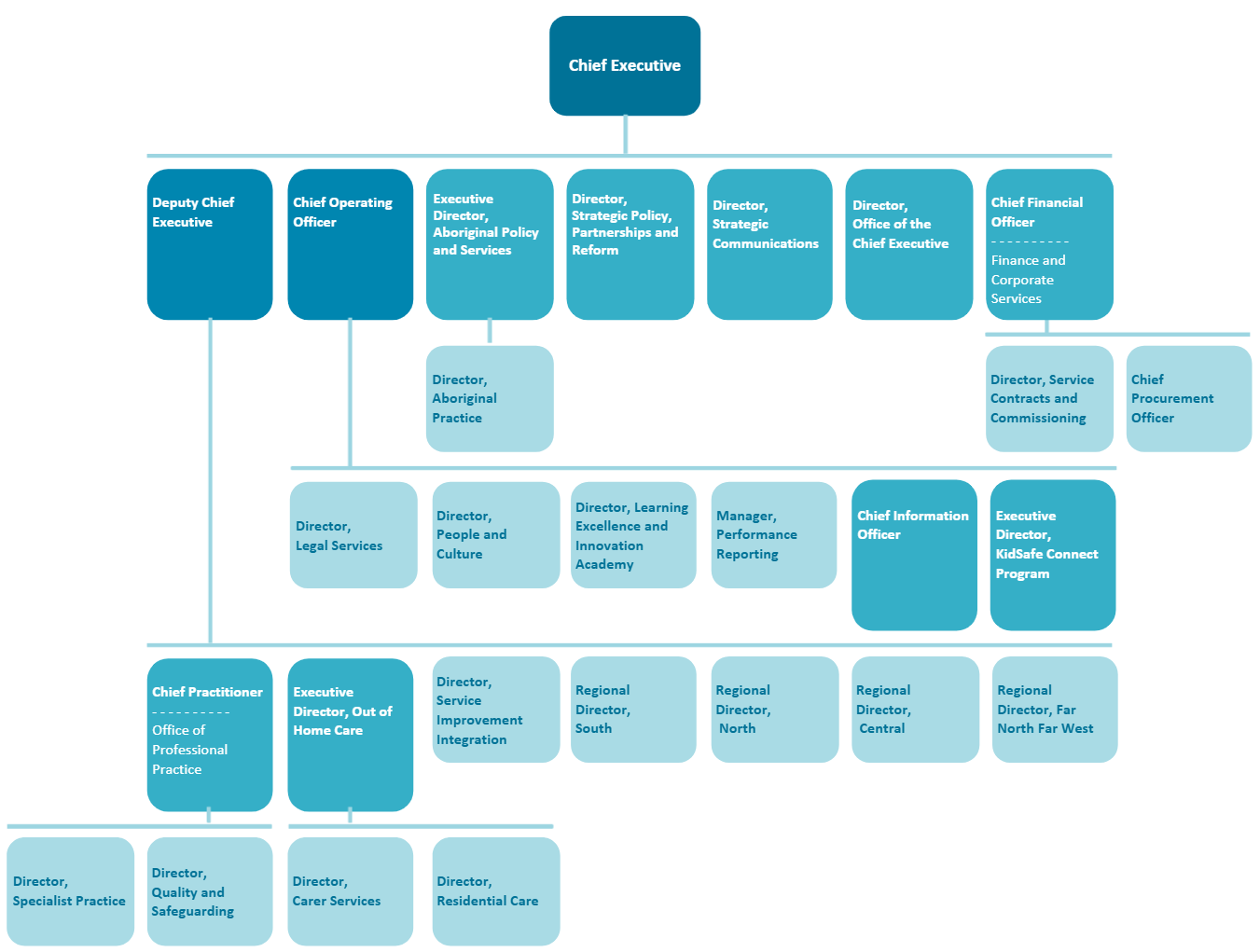
Our organisational structure | |
As of June 30 2026.
| |
Changes to the agency | |
During 2025-26, the following changes were made to the agency’s structure to create stronger alignment with key objectives:
| |
Our Minister
| |
Our Executive teamAs of 30 June 2026, the department’s Senior Executive team comprised:
| |
Legislation administered by agency
| |
 The Hon Alice Rolls MP is the Minister for Child Protection and is responsible for the care and protection of children and young people in South Australia. The Minister leads the government’s efforts to strengthen child protection, promote the wellbeing of children and young people and support timely intervention where there is risk of harm.
Performance at a glance
The DCP Strategic Plan 2022-2026 sets out seven key departmental priorities to deliver on its vision for all children and young people to grow up safe, healthy, connected and feeling loved so they reach their full potential:
- Leaders in practice excellence
- Closing the gap
- A child protection system that meets the needs of children and young people
- A thriving workforce
- Active and collaborative partnerships
- Working alongside carers
- Quality services and safeguarding.
This year, DCP continued to deliver on its strategic priorities through implementation of the DCP Action Plan 2025–26, progressing key reform initiatives designed to improve outcomes for children, young people and families across South Australia.
The department progressed significant legislative and policy activities in preparation for implementation of the Children and Young People (Safety and Support) Act 2025, including a comprehensive review of existing regulations and identification of new regulatory requirements to support the Act's commencement, with stakeholder consultation on proposed regulations planned for the second half of 2026.
Reducing the over-representation of Aboriginal children and young people in care remains a critical priority for DCP. The new Act embeds the Aboriginal and Torres Strait Islander Child Placement Principle to the standard of active efforts, providing a strong foundation for a child protection and family support system that better supports Aboriginal children, young people, families and communities.
Alongside these legislative reforms, DCP continues to work in partnership with Aboriginal Community Controlled Organisations (ACCOs) to strengthen culturally responsive services and advance the co-design of Aboriginal-specific legislative provisions. This commitment is also reflected in the development of the next Stretch Reconciliation Action Plan, initiatives to grow cultural capability and the Aboriginal workforce, and work to develop a jurisdictional plan to support achievement of Closing the Gap Target 12.
The department further strengthened its commitment to embed the voices of children and young people with lived experience into decision-making through advancing a Statement of Commitment to Children and Young People and delivering the Child and Youth Engagement Framework. Together with DCP’s regional youth advisory groups, these initiatives are supporting a more consistent approach to engaging children and young people involved in the child protection and family support system.
Work also progressed across key service delivery initiatives, including expansion of the Care Beyond Kin Program, development of a Restrictive Practices Framework, improvements to post-care supports and planning to modernise information systems and data capability through implementation of the KidSafe Connect Program.
Across 2025-26, DCP continued to improve outcomes for children, young people and families with key performance improvements including:
- A 5.7% reduction in new entries into care during 2025-26, with 551 children and young people entering care compared with 584 in the previous year.
- The total annual growth in the number of children and young people in care remaining below 1% for the third consecutive year.
- Average Child Abuse Report Line (CARL) wait times reduced by 45.2%, from 14 minutes and 22 seconds in 2024–25 to 7 minutes and 52 seconds in 2025–26.
- Investigation rates remained consistent at 29.6%, reflecting a sustained response to children, young people and families requiring assessment and intervention.
- The Care Beyond Kin Program diverted 102 children and young people from entering residential care and delivered 410 respite placements, supporting 112 children in care.
- 65 children and young people were reunified with their families from residential care, with a further 41 actively working towards reunification.
| CHILDREN IN CARE | 30 Jun 22 | 30 Jun 23 | 30 Jun 24 | 30 Jun 25 | 30 Jun 26 |
|---|---|---|---|---|---|
| Foster Care | 1,669 | 1,666 | 1,615 | 1,607 | 1606 |
| Kinship Care | 2,327 | 2,406 | 2,447 | 2,455 | 2472 |
| Family Day Care | 35 | 43 | 51 | 48 | 52 |
| Independent Living | 60 | 48 | 57 | 75 | 56 |
| Residential Care | 649 | 701 | 721 | 695 | 696 |
| Care Beyond Kin | n/a | n/a | n/a | 20 | 34 |
Agency specific objectives and performance
| Agency objectives | Indicators | Performance |
|---|---|---|
| Leaders in practice excellence – Staff in all parts of child protection develop and use best practice in their work to deliver improved outcomes for children, young people, carers and families. | Expand the Family Group Conference program. |
|
| Review and update all training to ensure departmental readiness for the requirements of the new legislation. |
| |
| Modernise technology systems and enhance digital capability to support service delivery. |
| |
| Closing the gap – We commit to a transformed child protection system that makes active efforts and where Aboriginal people and communities are empowered to lead decision making about the care and wellbeing of Aboriginal children and young people. | Partner on Aboriginal led initiatives to address over representation. |
|
| Embed cultural authority and self determination through implementation of the Children and Young People (Safety and Support) Act 2025. |
| |
| Deliver outcomes related to the DCP ACCO Procurement and Investment Plan. |
| |
| Enhance collaboration across jurisdictions to deliver more integrated child protection responses for Aboriginal children and families. |
| |
| Reconnect Aboriginal children and young people into family care. |
| |
| A child protection and family support system that meets the needs of children and young people – We commission and deliver services based on a deep understanding of the needs of children and young people in care and our aspirations for them to heal from trauma and reach their full potential. | Develop a plan to implement the Children and Young People (Support and Safety) Act 2025. |
|
| Lead the department’s response to recommendations from the South Australian Royal Commission into Domestic, Family and Sexual Violence. |
| |
| Reimagine residential care to improve outcomes for children and young people. |
| |
| Create a systemic approach to embedding the voice of children and young people with a care experience. |
| |
| Work with OECD to implement early childhood reforms for children in care. |
| |
| A thriving workforce – We are future focused in our workforce strategy, supporting and valuing our staff, proactively recruiting, and establishing sustainable systems, processes and workplaces that enable us to be highly effective. | Deliver on the Public Sector Anti-Racism Strategy. |
|
| Launch the DCP Workforce Strategy with a focus on asserting DCP as an employer of choice. |
| |
| Foster a connected and informed workforce. |
| |
| Active and collaborative partnerships – We work together with our service partners and alongside the community to improve outcomes for children, young people, carers and families. | Build a connected and informed child and family services sector. |
|
| Implement a best practice model to proactively respond to concerns about unborn children and infants. |
| |
| Working alongside carers – We respect and value carers as vital partners in keeping children and young people safe and well. | Expand the Care Beyond Kin program, formerly the Additionally Approved Care program. |
|
| Promote foster care and expand the carer community. |
| |
| Increase support for carers. |
| |
| Amplify the voices of carers in decision making. |
| |
| Quality services and safeguarding – We are accountable and transparent, and pursue continuous improvements to promote the safety and wellbeing of children and young people throughout the service we fund and provide. | Commence a review of the DCP Risk Assessment Framework and Structured Decision Making tools. |
|
| Introduce a new approach to respond to care concerns. |
| |
| Promote workforce wellbeing and inclusion. |
| |
| Support the delivery of therapeutic services to children and young people. |
|
Corporate performance summary
During 2025-26, DCP continued to progress and deliver on key corporate initiatives including:
- Launched the KidSafe Connect Program to drive the modernisation of the Connected Client and Case Management System (C3MS), strengthening system capability, responsiveness and operational efficiency.
- Established a new Specialist Practice directorate to strengthen clinical, specialist and practice leadership across the department, consolidating responsibility for disability and development, psychological services, court services, and adverse event review functions.
- Progressed digital innovation through the pilot of Microsoft Copilot (Work), informing future artificial intelligence adoption across DCP.
- Strengthened contract management practices and collaboration with non government service providers to support the effective monitoring of performance, financial and service delivery outcomes, contributing to improved outcomes for children, young people and families.
Employment opportunity programs
| Program name | Performance |
|---|---|
| Aboriginal Employment | DCP continues to provide and enhance employment opportunities for Aboriginal and Torres Strait Islander people across the department. Implementing the 2024-2026 Aboriginal Workforce Action Plan has increased community partnerships and participation, providing culturally safe forums and networks across the department, and promotion of development and study pathways. As at 30 June 2026, 159 employees (5.2%) identified as Aboriginal and/or Torres Strait Islander, which is a net increase of 10 employees from the prior reporting period. During 2025-26, 54 talented Aboriginal employees commenced with DCP and the department experienced an increase in Aboriginal employee retention rates. |
| Disability Employment | The department has implemented policies and processes that support reasonable adjustments for employees with disability that enable employees to perform their roles effectively. As at 30 June 2026, 37 (1.2%) employees declared they have a disability, an increase on the previous reporting period. |
| Gender Equality & Respect | Gender equality and respect is foundational to the department and our work with children and young people. The department achieved White Ribbon reaccreditation in September 2025, reaffirming our ongoing commitment to ending gendered violence against women and supporting employees who may be experiencing domestic and family violence. |
| Diversity & Inclusion | DCP respects and values the diversity of its employees, clients and partners, and is committed to creating a diverse, supportive and inclusive workforce. The department:
|
Agency performance management and development systems
| Performance management and development system | Performance management and development system |
|---|---|
| Performance Development Plans | As at 30 June 2026, 66% of employees had recorded a Performance Development Plan (PDP) completed within the previous six months. DCP is committed to performance development, with a strong focus on increasing completion rates and embedding a consistent approach across the agency. |
Work health, safety and return to work programs
| Program name | Performance |
|---|---|
| Work Health and Safety | The department has increased its investment in WHS through an expansion of the WHS Partnering model to increase specialist accessibility and on the ground support. WHS specialists have increasingly contributed to policy development and major projects to build in safety considerations into departmental decision making and change processes across the organisation. The department continues to build WHS capability through scheduled Incident Cause Analysis Method (ICAM) training for Residential Care Supervisors, twice yearly due diligence training for Officers and the suite of online WHS programs. Reporting of hazards, incidents, and injuries increased during the year, reflecting a more engaged workforce and a stronger safety reporting culture. Over the past 12 months, the department recorded a significant reduction in a cross section of WHS indicators. Notifiable Incidents reduced by more than 80% and there was an 80% reduction in Provisional Improvement, Improvement and Prohibition Notices. Workers’ compensation claim lodgements reduced by 20% compared with the previous 12 month period. This improvement reflects a continued focus on early intervention, safer work practices, and strengthened support for staff recovering from injury. |
| Wellbeing | The department is strengthening its wellbeing supports through a series of targeted initiatives including the delivery of proactive group wellbeing sessions for Residential Care staff and a strategic shift toward engaging psychologists through Employee Assistance Program services to ensure support is better aligned to workforce needs. Group wellbeing sessions have also been incorporated into structured debriefing processes for staff managing challenging situations, providing practical tools to support resilience and team cohesion. Together, these initiatives reflect a more proactive and evidence informed approach to staff wellbeing, ensuring employees have timely access to specialised and practical support. |
| Workplace injury claims | Current year 2025-26 | Past year 2024-25 | % change (+ / -) |
|---|---|---|---|
| Total new workplace injury claims | 92 | 117 | -21.3% |
| Fatalities | 0 | 0 | 0% |
| Seriously injured workers* | 0 | 0 | 0% |
| Significant injuries (where lost time exceeds a working week, expressed as frequency rate per 1000 FTE) | 23.7 | 30.1 | -21.3% |
* Number of claimants assessed during the reporting period as having a whole person impairment meeting the relevant threshold under the Return to Work Act 2014 (Part 2 Division 5).
| Work health and safety regulations | Current year 2025-26 | Past year 2024-25 | % change (+ / -) |
|---|---|---|---|
| Number of notifiable incidents (Work Health and Safety Act 2012, Part 3) | 3 | 18 | -83.3% |
| Number of provisional improvement, improvement and prohibition notices (Work Health and Safety Act 2012 Sections 90, 191 and 195) | 1 | 5 | -80% |
| Return to work costs** | Current year 2025-26 | Past year 2024-25 | % change (+ / -) |
|---|---|---|---|
| Total gross workers compensation expenditure ($) | 6,264,041 | 7,406,703 | -15.4% |
| Income support payments – gross ($) | 2,862,650 | 4,177,893 | -31.4% |
** Before third-party recovery.
Data for previous years is available at: https://data.sa.gov.au/data/dataset/work health-safety-and-return-to-work-performance-for-dcp (external site) (external site)
Executive employment in the agency
| Executive classification | Number of executives |
|---|---|
| EXECOF | 1 |
| SAES2 | 7 |
| SAES1 | 14 |
Data for previous years is available at: https://data.sa.gov.au/data/dataset/executive employment-in-the-department-for-child-protection (external site) (external site)
The Office of the Commissioner for Public Sector Employment (external site) (external site) has a workforce information page (external site) (external site) that provides further information on the breakdown of executive gender, salary and tenure by agency.
Performance at a glance
The following is a brief summary of the overall financial position of the agency. The information is unaudited. Full audited financial statements are attached to this report.
| Statement of comprehensive income | 2025-26 Budget $000s | 2025-26 Actual $000s | Variation $000s | Past year 2024-25 Actual $000s |
|---|---|---|---|---|
| Total income | 894 215 | 998 108 | 103 893 | 988 223 |
| Total expenses | 877 476 | 1 003 332 | 125 856 | 971 482 |
| Net result | 16 739 | (5 224) | (21 963) | 16 741 |
| Total comprehensive result | 16 739 | 12 584 | (4 155) | 16 741 |
| Statement of financial position | 2025-26 Budget $000s | 2025-26 Actual $000s | Variation $000s | Past year 2024-25 Actual $000s |
|---|---|---|---|---|
| Current assets | 56 837 | 78 050 | 21 213 | 68 319 |
| Non-current assets | 85 485 | 86 672 | 1 187 | 66 552 |
| Total assets | 142 322 | 164 722 | 22 400 | 134 871 |
| Current liabilities | 82 446 | 93 300 | 10 854 | 83 195 |
| Non-current liabilities | 65 459 | 65 279 | (180) | 58 117 |
| Total liabilities | 147 905 | 158 579 | 10 674 | 141 312 |
| Net assets | (5 583) | 6 143 | 11 726 | (6 441) |
| Equity | (5 583) | 6 143 | 11 726 | (6 441) |
Consultants disclosure
The following is a summary of external consultants that have been engaged by the agency, the nature of work undertaken, and the actual payments made for the work undertaken during the financial year.
Consultancies with a contract value below $10,000 each
| Consultancies | Purpose | Actual payment |
|---|---|---|
| All consultancies below $10,000 each (combined) | Various | $7,731.26 |
Consultancies with a contract value above $10,000 each
| Consultancies | Purpose | Actual payment |
|---|---|---|
| Lindsey Gough | Performance Management Framework consultation, development and reporting | $28,800 |
| Mativia Pty Ltd | Performance Management Framework review and update | $26,400 |
| Transforming Solutions (Aust) Pty Ltd | Independent review of the Out of Home Care business support function | $24,700 |
| Veronica Marin Consulting | Independent review and update of residential care policies, procedures and supporting documentation | $21,000 |
| Lara Spence | Performance Management Framework reporting | $19,200 |
| Total | $120,100 | |
Data for previous years is available at: https://data.sa.gov.au/data/dataset/consultants-utilised-in-department-for-child protection (external site) (external site) See also the Consolidated Financial Report of the Department of Treasury and Finance (external site) (external site) published at the end of each calendar year for the total value of consultancy contracts across the South Australian public sector.
Contractors disclosure
The following is a summary of external contractors that have been engaged by the agency, the nature of work undertaken, and the actual payments made for work undertaken during the financial year.
Contractors with a contract value below $10,000
| Contractors | Purpose | Actual payment |
|---|---|---|
| All contractors below $10,000 each (combined) | Various | $96,294.55 |
Contractors with a contract value above $10,000 each
| Contractors | Purpose | Actual payment |
|---|---|---|
| Talent International (SA) P/L | HR – Short term staffing | $711,379.30 |
| Randstad Pty Ltd | HR – Short term staffing | $663,871.29 |
| Hays Specialist Recruitment | HR – Short term staffing | $268,470.52 |
| Attain Services Pty Ltd | HR – Short term staffing | $241,610.00 |
| Datacom Systems (Au) Pty Ltd | Professional services – ICT services | $199,835.58 |
| Bentleys (SA) Pty Ltd | Professional services – Finance services | $126,077.20 |
| Chapman Advisory | Professional services – ICT services | $122,400.00 |
| Info-tech Research Group | Professional services – ICT services | $109,641.00 |
| Procure Edge Advisory Pty Ltd | HR – Short term staffing | $102,884.00 |
| Paxus Australia Pty Ltd | HR – Short term staffing | $98,934.97 |
| KPMG Australia Technology Solutions Pty Ltd | Professional services – ICT services | $94,457.00 |
| A P Tsakalos Human Resources Consultant | Professional services – Human Resources | $80,390.00 |
| Virtus Security Consultants | Professional services – Asset services | $74,490.00 |
| Peoplebank Australia Ltd | HR – Short term staffing | $71,540.64 |
| Edge Recruitment | HR – Short term staffing | $58,594.60 |
| HWLE Lawyers | Professional services – Legal services | $53,914.20 |
| Agile Analytics Pty Ltd | Professional services – ICT services | $47,000.00 |
| Fragile To Agile (Asia Pac) P/L | Professional services – ICT services | $45,000.00 |
| MTX Australia Pty Ltd | Professional services – ICT services | $43,342.60 |
| Jill Wong Consulting | HR – Short term staffing | $39,355.00 |
| Benny Button Pty Ltd | Professional services – Training/Personal Development | $38,066.40 |
| Brown Falconer Group Pty Ltd | Professional services – Asset services | $35,200.00 |
| Deloitte Risk Advisory Pty Ltd | Professional services – ICT Services | $32,508.00 |
| EGM Partners | Professional services – Human Resources | $31,680.00 |
| KPMG | Professional services – ICT services | $31,665.01 |
| ABFA Pty Ltd | Professional services – Finance services | $30,000.00 |
| DXC Technology Australia | Professional services – ICT services | $29,065.26 |
| Harrison McMillan Pty Ltd | HR – Short term staffing | $28,179.99 |
| Vendor Panel Pty Ltd | Professional services – ICT services | $25,256.25 |
| DFP Recruitment Services | HR – Short term staffing | $20,554.21 |
| Deloitte Touche Tohmatsu | Professional services – ICT services | $19,200.00 |
| Taptu Pty Ltd | Professional services – ICT services | $17,850.00 |
| Success Workplace Consulting | Professional services – Employment Relationship | $16,905.69 |
| Shelley-Jo Warchol | Professional services – Human Resources | $16,672.00 |
| Timetarget Pty Ltd | HR – Short term staffing | $15,545.50 |
| Synechron | Professional services – ICT services | $15,468.75 |
| Simple Integrated Marketing Pty Ltd | Professional services – ICT services | $12,400.00 |
| Hender Group Pty Ltd | HR – Short term staffing | $11,029.47 |
| Dell Australia Pty Ltd | Professional services – ICT services | $10,723.97 |
| Total | $3,691,158.40 | |
Data for previous years is available at: https://data.sa.gov.au/data/dataset/contractors-utilised-by-dcp (external site) (external site) The SA Tenders and Contracts website (external site) (external site) displays details of Government of South Australia-awarded contracts (external site) (external site) for goods, services and works and across government contracts (external site) (external site).
Contracts entered into with SA businesses and non-SA businesses
The following reflects contracts entered into during the financial year as reported to the Department of Treasury and Finance pursuant to Treasurer’s Instructions 18 - Procurement. The information is unaudited.
| Contacts entered into | 2025-26 Number of contracts | 2025-26 Contract value $000s |
|---|---|---|
| With South Australian businesses | 48 | $719,354,228.69 |
| With non-South Australian businesses | 17 | $23,619,202.07 |
| Total | 65 | $742,973,430.76 |
Note: ‘South Australian businesses’ has the same meaning as in Treasurer’s Instructions 18 - Procurement.
Risk and audit at a glance
DCP maintains a robust risk and internal control environment supported by an effective Internal Audit and Risk function, Performance and Risk Committee (PRC) and associated internal audit and risk management frameworks. The department has an approved rolling three-year Internal Audit Plan that is reviewed annually and updated to reflect current risks and departmental priorities. Progress against the 2025-26 plan was monitored and reported to the Strategic Leadership Committee (SLC) and the PRC on a regular basis and the status and progress of actions arising from internal audit, Auditor General and Control Self-Assessment reviews are monitored and reported on a quarterly basis.
Based on the internal audit work undertaken in 2025-26, together with the results of the quarterly monitoring and follow up of Control Self-Assessment action plans, previous audit actions and strategic and operational risk treatment plans, the overall internal audit opinion for 2025-26 identified a number of areas in respect of Procurement and Contract Management where control improvements would improve the overall effectiveness of the management of risk in this area. Procurement and Contract Management risks remain a high priority for the department.
No other significant issues, concerns or risks were identified that indicated the overall risk and control environment was not effective.
Strategic and operational risk registers are formally reviewed on a six-monthly basis. To support this process, Internal Audit and Risk facilitated risk workshops and held discussions with all business units to update risk assessments, controls and treatment plans. All strategic, operational and fraud risks are recorded and monitored using the Ventiv Risk system to improve the efficiency and usefulness of risk monitoring, review and reporting.
The PRC met quarterly through 2025-26 with an additional meeting in August 2025 to consider the 2024-25 draft financial statements.
As per usual practice, items of concern, risks, and significant issues that the committee felt warranted attention were raised and discussed throughout the year during committee meetings as part of the normal course of business.
The introduction of the Climate Ready Government Cabinet Circular in 2025-26 requires all government agencies to consider climate-related risks and opportunities. Internal Audit and Risk has been engaged in supporting DCP’s response to the SA Government’s Climate Ready Government initiative throughout 2025-26. As part of this, the team is currently planning a Climate Risk Workshop with the Climate Ready Government Committee.
Effective management of climate-related risks and opportunities will help South Australian Government agencies to mitigate the impacts of climate change on public services and assets, harness new economic and environmental opportunities, and help achieve the state’s greenhouse gas emissions reduction targets.
Fraud detected in the agency
| Categor/nature of fraud | Number of instances |
|---|---|
| Timesheet fraud | 2 |
| Fraudulent medical certificates | 1 |
Note: Fraud reported includes actual and reasonably suspected incidents of fraud.
Strategies implemented to control and prevent fraud
DCP is committed to the prevention, detection and control of fraud, corruption and other criminal conduct, misconduct and maladministration in connection with the activities of the department. Fraud risks are identified as part of the department’s risk management activities and are captured in a Fraud Risk Register.
The DCP Fraud and Corruption Control Framework, adopted from the South Australian Public Sector Fraud and Corruption Control policy, aligns with Australian Standard – AS 8001:2021 Fraud and Corruption Control. It is designed to assist in the prevention, detection and response to activities labelled or defined as fraud. The Framework was reviewed and updated in July 2025.
DCP undertakes a range of corporate and operational activities to prevent and detect fraud in accordance with the Framework, including regular review of financial management policies and procedures, a comprehensive internal audit program, undertaking strategic and operational risk assessments, and raising the general awareness of fraud amongst staff.
Internal Audit and Risk carried out operational risk assessments across key areas of the business, with regular reviews of fraud risks pertinent to specific business functions. Operational risk registers were continually assessed and updated, in line with the Risk Assessment Matrix. Fraud risks are captured through operational risk workshops, and the Fraud Risk Register was reviewed and updated in June 2026 to ensure it reflects current risks, risk exposures and controls.
DCP addresses any suspected, alleged or proven instances of fraud, corruption or other criminal conduct, misconduct or maladministration by employees or other public officers, including through:
- investigation by appropriately skilled and experienced personnel who are independent of the business unit in which the alleged conduct occurred
- reporting to the Office for Public Integrity or Ombudsman SA
- involvement of other authorities such as South Australia Police
- compliance with the Public Interest Disclosure Act 2018, (articulated through the DCP Public Interest Disclosure Procedure)
Public interest disclosure
Number of occasions on which public interest information has been disclosed to a responsible officer of the agency under the Public Interest Disclosure Act 2018:
1
Data for previous years is available at: https://data.sa.gov.au/data/dataset/public interest-disclosures-for-the-department-for-child-protection (external site) (external site)
Note: Disclosure of public interest information was previously reported under the Whistleblowers Protection Act 1993, which was repealed by the Public Interest Disclosure Act 2018 on 1 July 2019.
| Act or Regulation | Requirement |
|---|---|
| Children and Young People (Safety) Act 2017 | Part 4 – Additional Reporting Obligations of the Chief Executive (a) the following information in respect of Aboriginal and Torres Strait Islander children and young people: |
DCP’s capacity to report on section 156(1)(a)(ii) and (iii) is in development. As at 30 June 2026:
- The rate of case plan completion for Aboriginal children and young people in care is 90.4%.
- 90.4% of Aboriginal children and young people in care have a current and approved Aboriginal Cultural Identity Support Tool.
| Act or Regulation | Requirement |
|---|---|
| Children and Young People (Safety) Act 2017 | Part 4 – Additional Reporting Obligations of the Chief Executive Section 156(1) The Chief Executive must, not later than 30 September in each year, submit to the Minister a report setting out– (b) the following information relating to case workers and children and young people in care: (i) whether a case worker has been allocated to each child and young person in care, (ii) whether each child and young person in care has had face to face contact with their allocated case worker at least once in each month, and, if not, the extent to which those targets have been achieved, and (c) whether each child or young person under the guardianship of the Chief Executive until they are 18 years of age has a case plan that is developed, monitored and reviewed as part of a regular 6 monthly planning cycle and, if not, the extent to which that target has been achieved, and (d) the emergence of any recurring themes in the matters referred to in a preceding paragraph, and (e) the following information relating to recommendations of the Child Protection Systems Royal Commission (being information relating to the preceding financial year): (i) the extent to which any outstanding recommendations have been Implemented, (ii) if a decision was made to implement a particular recommendation that the government, or the Minister or Chief Executive, had previously indicated would not be implemented—the reasons for that decision and the manner in which the recommendation is to be implemented, (iii) if a decision was made not to implement a particular recommendation that the government, or the Minister or Chief Executive, had previously indicated would be implemented—the reasons for that decision, and (f) the number, and general nature, of placements of children and young people under section 77, and (g) any other matter prescribed by the regulations for the purposes of this paragraph. |
- As at 30 June 2026, all children and young people in care were allocated to a Primary Assigned Case Worker.
- In the month ending 30 June 2026, 52.5% of children and young people had a face-to-face contact meeting with their case worker.
- As at 30 June 2026, 93.1% of children and young people had a current and approved case plan.
- As at 30 June 2026, 251 of the 260 Child Protection Systems Royal Commission recommendations had been completed with 5 recommendations continuing to be progressed (noting 4 recommendations were not accepted).
- While 2023-24 marked the final stand-alone report outlining the state government’s progress implementing the Child Protection Systems Royal Commission recommendations, DCP will continue its commitment to coordinate agency updates on progress implementing outstanding recommendations to meet the reporting requirements of section 156(1)(e).
- An overview of recommendations is available on the DCP website via the following link: https://www.childprotection.sa.gov.au/research-and publications/publications/child-protection-systems-royal-commission
| Act or Regulation | Requirement |
|---|---|
| Children and Young People (Safety) Act 2017 | Section 15 – Additional annual reporting Obligations (1) The Minister must, not later than 30 September in each year, prepare a report– (a) detailing the role of the Minister, and the extent to which the Minister has performed the Minister's functions, in respect of the operation of this Act for the financial year ending on the preceding 30 June. |
This annual report details the role of the Minister and the extent to which the Minister has performed the Minister’s functions for the 2025-26 financial year. In addition, to help ensure outcomes for children and young people are at the centre of our efforts, the Minister has:
- Strengthened collaboration with peak bodies through the signing of a new Ministerial Peak Forum Charter, reinforcing a shared commitment to improving outcomes for children and young people, recognising Aboriginal cultural authority and supporting reform across the child protection and family support sector.
- Amplified the voices of children and young people with care experience through the Ministerial Youth Advisory Council, ensuring their perspectives remain central to decision-making.
- Maintained strong connections with the Carer Council, Direct Experience Group and Child Protection Expert Group, ensuring child protection and family support reform is shaped by lived experience, carer insights and expert guidance.
- Convened the third Child Protection and Family Support Symposium, fostering collaboration and a shared commitment to better outcomes for children, young people and families across South Australia.
| Act or Regulation | Requirement |
|---|---|
| Children and Young People (Safety) Act 2017 | Section 15 – Additional annual reporting Obligations (1) The Minister must, not later than 30 September in each year, prepare a report– (b) setting out the following information relating to the provision of family support services and intensive family support services to children and young people who are at risk and their families: (i) the extent to which such services were provided by, or on behalf of, the State (including statistical data relating to the number of times such services were provided) during the financial year ending on the preceding 30 June, (ii) the amount of resources allocated for the provision of such services by or on behalf of the State— (A) during the financial year ending on the preceding 30 June, and (B) during the current financial year, (iii) the extent to which the allocated resources were, in fact, spent on the provision of such services during the financial year ending on the preceding 30 June. |
The following information summarises the delivery of programs/services that relate to the provision of family support services and intensive services to children and young people who are at risk and their families.
| Program/Service | Description and Summary of Outcomes in 2025-26 | Financial information | ||
|---|---|---|---|---|
| 2026-27 Budget $m | 2025-26 Actual expenditure $m | 2025-26 Budget $m | ||
| 1. Child and Family Support System The Child and Family Support System (CFSS) comprises a range of services and programs delivered by government and non-government services with the primary aim to keep children safe and well in family, community and culture. | ||||
| Tier 1: Out of home care prevention and intergenerational impact | ||||
| Out of home care prevention and intergenerational impact programs | Intensive band of family support programs focused on providing supports to families at imminent risk of having their children placed in care and a specific service working with young women under 25 whose children have been removed and are at risk of repeat removals of future children. There were 79 families accepted with an associated 170 children, and 10 young women accepted during 2025 26. | 5.6 | 5.4 | 5.4 |
| Tier 2: Intensive Family Services | ||||
| Intensive Family Services | Intensive Family Services (IFS) delivered by the Department of Human Services (DHS) and through partnerships with non government organisations and Aboriginal Community Controlled Organisations (ACCOs). Services provide targeted support for families with children aged 0-18 years with multiple and complex needs, who have been identified as high to very high risk of deepening involvement of the statutory child protection system. There were 1,267 families (referrals) with 2,882 associated children accepted for IFS during 2025-26. | 46.5 | 41.6 | 43.0 |
| Tier 3: Family Support Services | ||||
| Strong Families Strong Communities Program | Strong Families Strong Communities is a family support program delivered by non government organisations and ACCOs to assist families with medium to low-risk child safety concerns. There were 687 participants in the program in 2025-26. | 4.5 | 4.8 | 4.4 |
| Community Development Coordinator Program | Community Development Coordinators (CDCs), funded by DHS, are co- located within Children’s Centers or based within Safer Family Service offices, using a community development approach to improve outcomes for children and families. Together with local families and groups, they work to identify and strengthen protective factors within a community, enabling co designed and co-owned programs, whilst mobilising local resources. Statewide, 39 CDCs engaged with approximately 13,597 families during 2025-26 in a range of programs, group activities and community events. | 5.4 | 4.9 | 5.3 |
| Families Growing Together and Parenting SA | Families Growing Together and Parenting SA deliver parenting programs and resources via face-to-face and online formats. Parent Easy Guides (PEGs) developed by Parenting SA are distributed across South Australia for state-wide parenting support. Families Growing Together is funded by DHS and supported 1,312 families during 2025-26. Parenting SA distributed approximately 80,000 PEGs in 2025-26 and received 96,804 views on the Parenting SA website. | 0.9 | 0.8 | 0.9 |
| Family by Family Program | Family by Family is funded by DHS and delivered by a non government organisation. This peer support program is a network of families supporting other families to make lasting changes and includes support to families at risk of child abuse and neglect, and escalation into the statutory child protection system. There were 114 families supported during 2025-26. | 2.1 | 2.0 | 2.0 |
| CFSS Referral System | ||||
| Pathways Service and Child and Family Safety Networks (CFSNs) | Referrals into IFS are through the DHS CFSS Pathways Service (which was established in 2021 to provide a single point of entry). The service captures family information to inform system reform and to match families to appropriate services. CFSNs are multi-agency networks that provide regionally coordinated responses to referrals (pre-birth to 18 years) from the CFSS Pathways Service. Work includes planning, service allocation, and clinical collaboration. Members include government, non government and ACCOs. The CFSS Pathways Service and CFSNs processed a total of 3,235 referrals in 2025-26. | 4.2 | 3.8 | 4.1 |
| Act or Regulation | Requirement |
|---|---|
| Children and Young People (Safety) Act 2017 | Section 15 – Additional annual reporting Obligations (1) The Minister must, not later than 30 September in each year, prepare a report– (b) setting out the following information relating to the provision of family support services and intensive family support services to children and young people who are at risk and their families: (iv) bench-marking the resources referred to in subparagraph (ii) and (iii) against those allocated and spent by other States and Territories in the provision of such services during the financial year ending on the preceding 30 June. |
The Report on Government Services (ROGS) details this information. It is published in January each year and is available from https://www.pc.gov.au/ongoing/report-on government-services/ (external site) (external site)
| Act or Regulation | Requirement |
|---|---|
| Children and Young People (Safety) Act 2017 | Section 15 – Additional annual reporting Obligations (1) The Minister must, not later than 30 September in each year, prepare a report– (c) providing any other information required by the regulations for the purposes of this paragraph. |
| Indicators of Performance | Performance 2025-26 | Performance Comparison to 2024-25 | |
|---|---|---|---|
| Children placed on child protection orders | Total children placed on orders | 1,554 (608 for Aboriginal children and young people) | The number of children placed on an order was unchanged compared to 2024-25 (1,554). Aboriginal children comprised 39.1% of children placed on an order in 2025-26 compared to 36.0% (559) in 2024-25. This represents an increase of 8.8% (49 children) in the number of Aboriginal children placed on an order. |
| Children placed on child protection orders | Children placed on orders for first time | 717 (255 for Aboriginal children and young people) | The number of children placed on an order for the first time increased by 21 (3.0%) from 2024-25 (696). In 2025-26, 46.1% of children were placed on an order for the first time, compared to 44.8% in 2024-25. Aboriginal children comprised 35.6% of children placed on an order for the first time in 2025-26 compared to 35.5% (247) in 2024 25. |
| Children placed on child protection orders | Total children on a 12-month order at 30 June 2026 | 486 (197 for Aboriginal children and young people) | At 30 June 2026, 30 (5.8%) fewer children were on an order under the Guardianship of the Chief Executive up to 12 months, than at 30 June 2025 (516). Aboriginal children comprised 40.5% of children on an order under the Guardianship of the Chief Executive up to 12 months at 30 June 2026 compared to 41.9% (216) in 2025. |
| Children placed on child protection orders | Total children on an order until 18 years of age under Guardianship of the Chief Executive | 4,168 (1,672 for Aboriginal children and young people) | The number of children on a Guardianship of the Chief Executive to 18 years order at 30 June 2026 increased by 17 (0.4%) from 30 June 2025 (4,151). Aboriginal children comprised 40.1% of children on an order to 18 years at 30 June 2026 compared to 39.3% (1,633) in 2025. |
| Children in care | Number of children (0-17 years) in care at 30 June 2026 | 4,916 (1,883 Aboriginal children and young people) | The number of children aged 0-17 years in care at 30 June 2026 increased by 16 (0.3%) compared to 30 June 2025 (4,900). The proportion of children in family-based care has increased by 0.4 percentage points from 84.3% as at 30 June 2025 to 84.7% as at 30 June 2026. The number in family-based care has also increased by 34 (0.8%). Family based care includes foster, kinship, specific child only, guardianship family day care, and care beyond kin. The number of Aboriginal children aged 0-17 years in care at 30 June has increased by 25 (1.3%) in 2026 compared to 2025 (1,858). Aboriginal children comprise 38.3% of the 0-17 year olds in care population at 30 June 2026, 0.4 percentage points higher than the 2025 reported figure of 37.9%. The proportion of Aboriginal children in family-based care has decreased by 0.1 percentage points to 84.8%. |
Note: Figures may be different from those nationally reported, due to timing and the reconciliation process.
| Deaths of children and young people | During 2025-26, three children and young people in care passed away due to medical conditions. A further 23 children and young people who had prior contact with the department died during the same period. In most cases, the cause of death was attributed to congenital or medical conditions, some were accidental, while others are yet to be determined by the Coroner. It is important to note that the figures do not establish that an individual’s contact with the child protection system was a causative factor in their death. |
| Act or Regulation | Requirement |
|---|---|
| Children and Young People (Safety) Act 2017 | Section 32 – Chief Executive must assess each report indicating child or young person may be at risk (4) The Chief Executive must, in accordance with any requirements set out in the regulations– (b) include statistical information relating to action taken under this section to be included in the annual report of the Chief Executive under the Public Sector Act 2009. |
| Indicators of Performance | Performance 2025-26 | Performance Comparison to 2024-25 | |
|---|---|---|---|
| Responding to notifications | Total calls made to the Call Centre | 68,150 | In 2025-26, the number of calls to the Call Centre increased by 5.0% from 2024-25 (64,931). In 2025-26, the Call Centre answered 7,344 more calls than in 2024 25 (50,904). |
| Responding to notifications | Number of calls answered | 58,248 | |
| Responding to notifications | Average wait time to the Child Abuse Report Line | 7 min 52 sec | The average wait time to the Child Abuse Report Line (CARL) in 2025-26 was six minutes and 30 seconds less than 2024-25 (14 min 22 sec). |
| Responding to notifications | Number of eCARL submissions | 57,354 | There were 1,513 (2.6%) fewer eCARL submissions in 2025-26 than in 2024-25 (58,867). |
| Responding to notifications | Total number of notifications referred for an alternative response | Of the 18,785 notifications referred:
| There were 1,108 (5.6%) fewer alternative responses in 2025-26 than in 2024-25 (19,893). |
| Child protection responses | Number of notifications | 105,869 (26,571 for Aboriginal and Torres Strait Islander children and young people) | In 2025-26, there were 3,326 (3.2%) more notifications received than in 2024-25 (102,543). There were 2,272 (6.0%) fewer notifications screened in for further assessment and response in 2025-26, than in 2024-25 (38,166). Of the 2025-26 notifications, 33.9% were screened-in compared to 37.2% screened-in for 2024 25. Notifications for Aboriginal children comprised 25.1% of all notifications in 2025-26 compared to 24.8% (25,459) in 2024-25 and 29.3% of screened-in notifications compared to 28.8% (10,995) in 2024-25. |
| Child protection responses | Number of screened-in notifications | 35,894 (10,524 for Aboriginal and Torres Strait Islander children and young people) |
Note: Figures may be different from those nationally reported, due to timing and the reconciliation process.
Reporting required under the Climate Change and Greenhouse Emissions Reduction Act 2007
DCP has taken important steps to strengthen organisational resilience to climate change and support the transition to lower-emissions operations. A time limited cross-agency working group has been established and a dedicated officer assigned to support the assessment of risks associated with more frequent and severe extreme weather events on agency objectives and functions. The officer is also coordinating the development of a Carbon Management Plan to reduce departmental emissions.
Members of the working group have completed Climate Ready Government training and DCP has actively participated in the cross-agency Climate Change Action Steering Group and Community of Practice forums. The department has also commenced a review of policies and procedures to ensure future planning and decision-making appropriately considers the impacts of climate change.
Number of public complaints reported
| Complaint categories | Sub-categories | Example | Number of complaints 2025-26 |
|---|---|---|---|
| Professional behaviour | Staff attitude | Failure to demonstrate values such as empathy, respect, fairness, courtesy, extra mile; cultural competency | 27 |
| Professional behaviour | Staff competency | Failure to action service request; poorly informed decisions; incorrect or incomplete service provided | 5 |
| Professional behaviour | Staff knowledge | Lack of service specific knowledge; incomplete or out-of-date knowledge | 0 |
| Communication | Communication quality | Inadequate, delayed or absent communication with customer | 21 |
| Communication | Confidentiality | Customer’s confidentiality or privacy not respected; information shared incorrectly | 2 |
| Service delivery | Systems/technology | System offline; inaccessible to customer; incorrect result/information provided; poor system design | 0 |
| Service delivery | Access to services | Service difficult to find; location poor; facilities/ environment poor standard; not accessible to customers with disabilities | 0 |
| Service delivery | Process | Processing error; incorrect process used; delay in processing application; process not customer responsive | 40 |
| Policy | Policy application | Incorrect policy interpretation; incorrect policy applied; conflicting | 7 |
| Policy | Policy content | Policy content difficult to understand; policy unreasonable or disadvantages customer | 0 |
| Service quality | Information | Incorrect, incomplete, out-dated or inadequate information; not fit for purpose | 2 |
| Service quality | Access to information | Information difficult to understand, hard to find or difficult to use; not plain English | 1 |
| Service quality | Timeliness | Lack of staff punctuality; excessive waiting times (outside of service standard); timelines not met | 1 |
| Service quality | Safety | Maintenance; personal or family safety; duty of care not shown; poor security service/premises; poor cleanliness | 16 |
| Service quality | Service responsiveness | Service design doesn’t meet customer needs; poor service fit with customer expectations | 33 |
| No case to answer | No case to answer | Third party; customer misunderstanding; redirected to another agency; insufficient information to investigate | 0 |
| Total | 155 |
| Additional metrics | Total |
|---|---|
| Number of positive feedback comments | 8 |
| Number of negative feedback comments | 47 |
| Total number of feedback comments | 55 |
| % complaints resolved within policy timeframes | 55% |
Data for previous years is available at: https://data.sa.gov.au/data/dataset/public complaints-received-by-dcp-complaints-unit (external site) (external site)
Service improvements
| Recommendations from an independent review have been actioned to support improved practice approaches and increase accessibility to complaints processes. This includes updating the Complaint and Feedback Management Policy and Procedure to align with contemporary complaints management principles, strengthen governance requirements and provide greater clarity regarding complaint handling responsibilities and timeframes. In addition, a complaints management training package has been developed to support frontline staff with complaint resolution, effective communication, conflict resolution, negotiation skills and managing feedback at the local level. |
Compliance statement
| Department for Child Protection is compliant with Premier and Cabinet Circular 039 (PC039) Complaint Management in the South Australian Public Sector | Yes |
| Department for Child Protection has communicated the content of PC039 and the agency’s related complaints policies and procedures to employees | Yes |