

South Australians are being encouraged to open their hearts and homes to children and young people to provide them with the love, care and support they need to thrive into the future.
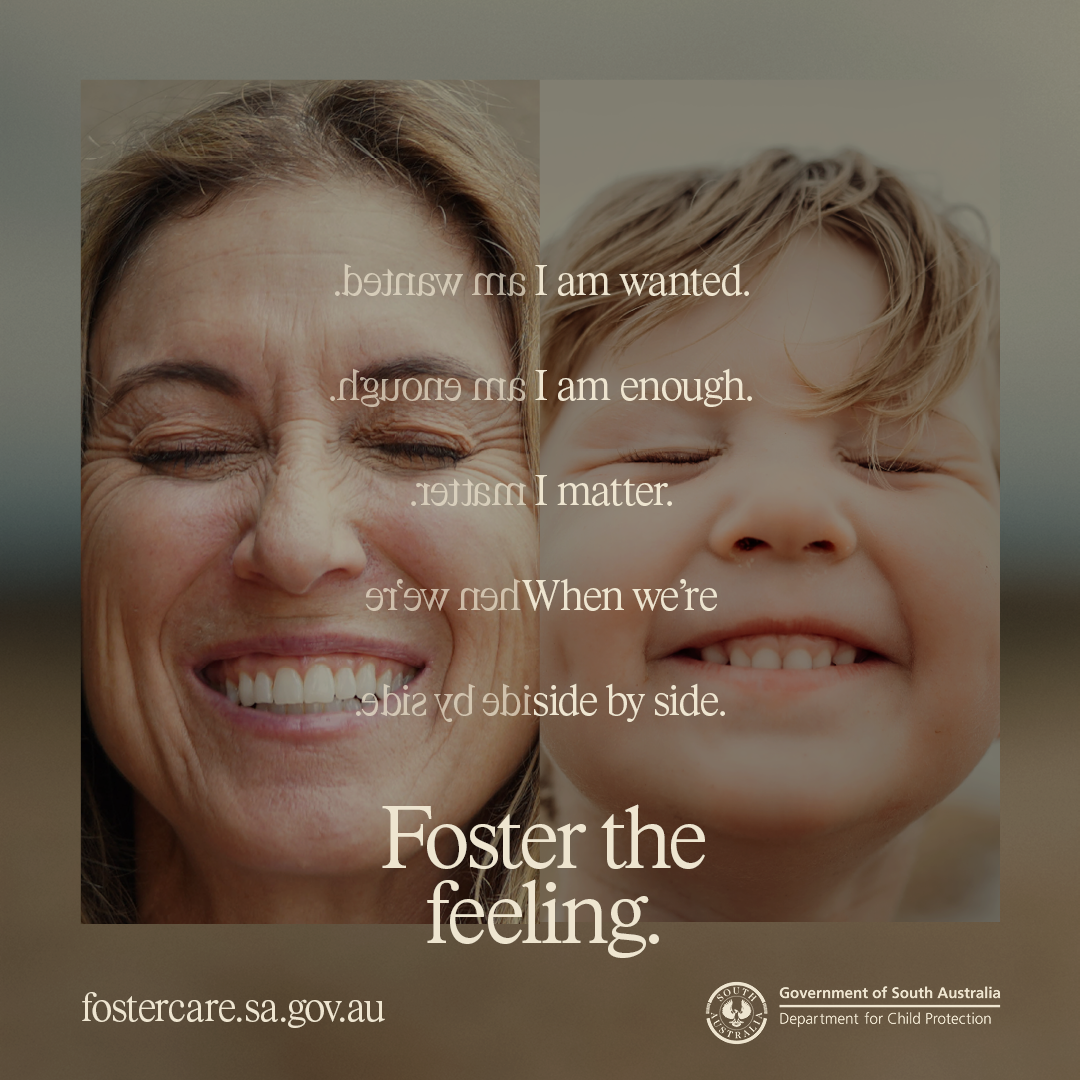
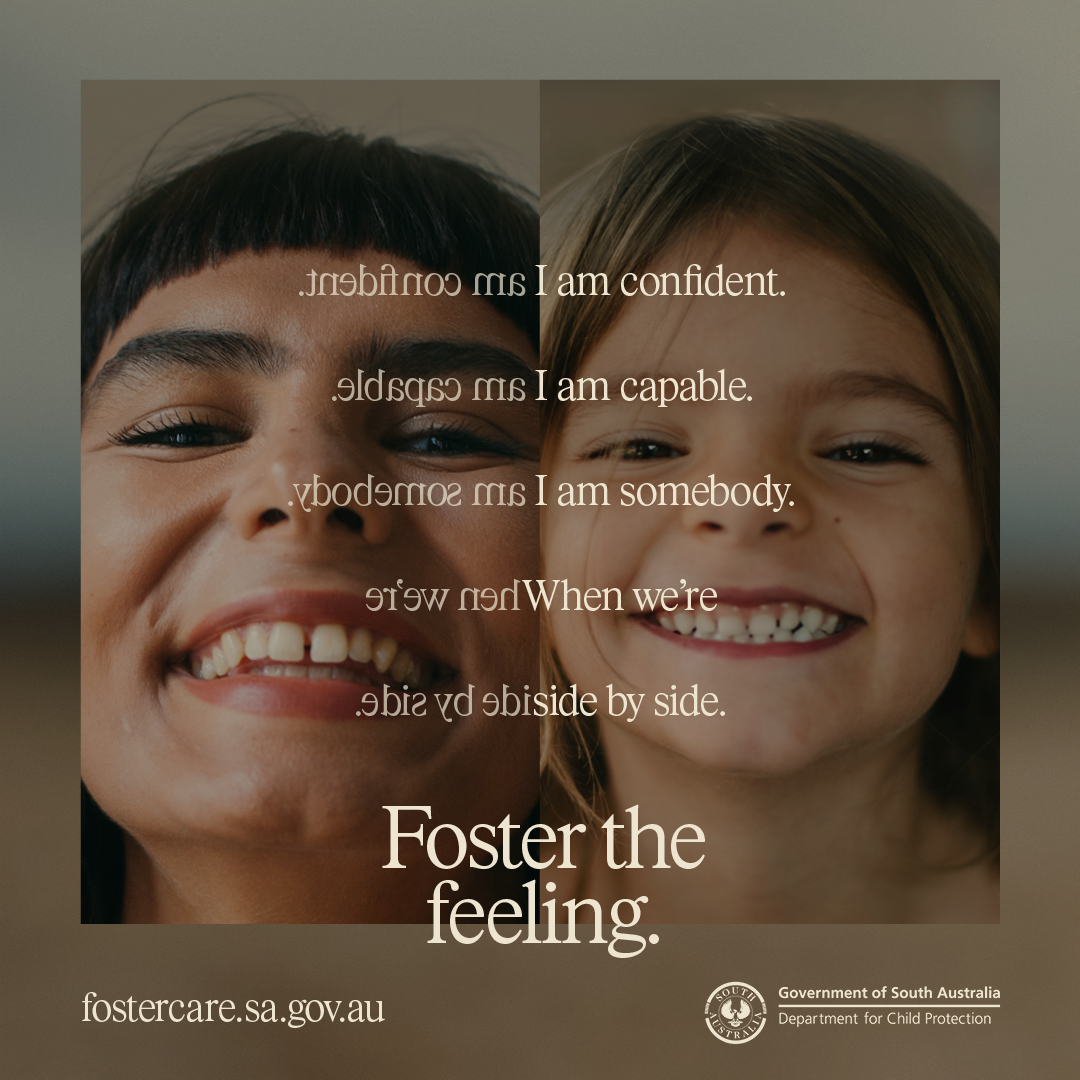
The new digital advertising campaign, featuring the tagline ‘Foster the Feeling’, is designed to encourage those who have previously considered caring for a child to take the next step and become an approved carer.
The reasons children come into contact with the child protection and family support system are varied, complex and heartbreaking. The state has about 2700 carers made up of kinship and fosters carers. In recent years there has been an increase in approved carers opening their homes and lives in the most special way, but we need more.
There are many different types of caring roles that exist and optionality to fit in with a diverse range of lifestyles and circumstances. These can range from just a few hours to a weekend, school holidays or longer-term care. Any amount of time given can make a world of difference in a young person’s life – providing a greater sense of stability and certainty.
The campaign concept is built on the universal feeling people experience at some point in their lives regardless of age, culture or background. It’s a notion that captures a moment or a point in time that triggers a powerful ‘feeling’ of pure joy and happiness that a carer and child would relate to as part of their journey together, whether it be foster, kinship, respite, short-term or a long-term carer.
Yorke Peninsula-based couple Margie and Gary recently retired from their roles as foster carers, having cared for 107 children in South Australia and about another 200 when they lived in the Northern Territory.
The couple provided short-term and respite foster care over more than 30 years.
Margie encouraged people who had ever considered becoming a carer to further explore the idea.
“It’s very fulfilling. If you’ve got a nurturing spirit within your heart, you can definitely do it,” she said.
“Everybody says that the kids get so much out of it, but I think you as a foster parent get much more than they do.
“It’s just lovely to see the children grow and their self-esteem glows – I love seeing them come out of their shell.
“It’s so worth the effort to see them grow into happy little human beings.”
Margie and Gary keep in touch with many of the children they’ve cared for, via arrangements with their new carers. They often receive phone calls about their school achievements and other important life events.
“We’re still Nan and Pop,” Margie said.
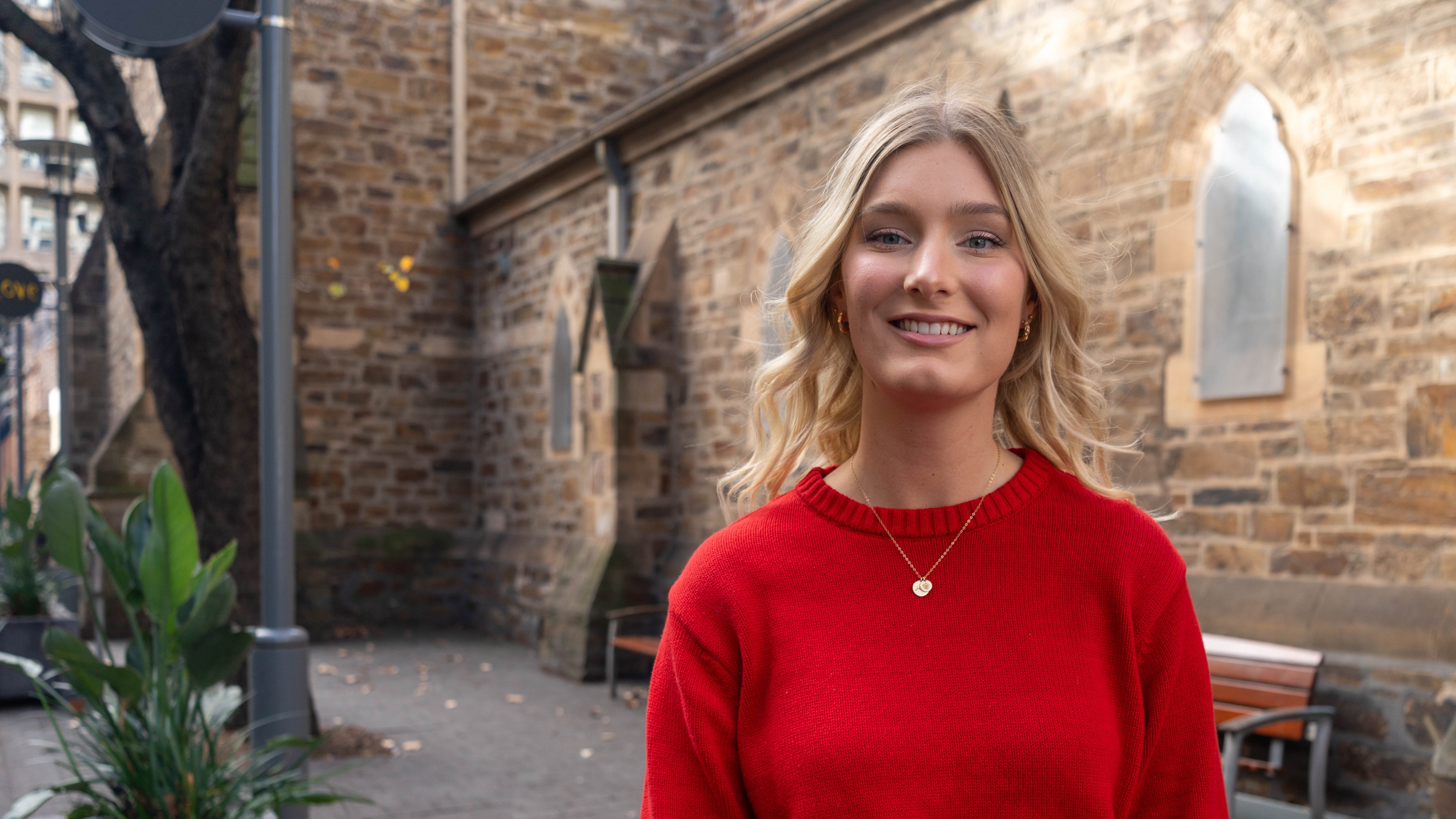
Adelaide-based neuropsychology and business marketing student Jess, who spent several of her early teenage years in care, said she had an overwhelmingly positive experience with the foster and kinship carers who looked after her.
“They provide so much love and support and they go into that role probably not realising how much they can change a child’s life,” she said.
“I found the stability and support I received allowed me to simply be a child.
“It allowed me to thrive in areas of my school and to develop and maintain friendships.
“It was their encouragement and having an adult to believe in you and to encourage you along your way.”
Department for Child Protection Chief Executive Jackie Bray said while the challenges and complexities carers faced could be immense, they were putting the livelihood and wellbeing of children first.
“The impact they are ultimately having on their lives is extraordinary,” she said.
“We are constantly in awe of the commitment and tenacity carers show in their efforts to strengthen children’s lives and keep them safe and supported to reach their goals.
Jackie said a family-based care environment was the preferred care setting for the majority of children.
“It provides a greater sense of belonging and the opportunity to form stronger carer-child relationships when such placements have proven to be safe and stable over time,” she said.
“We are always focused on how we can best connect with and support carers, ensuring we are responsive to their feedback, which is why we’ve delivered the Carers Voice portal to ensure their perspectives are prioritised and understand what they need and how they can best be supported.”
For more information about becoming a carer, please visit www.fostercare.sa.gov.au